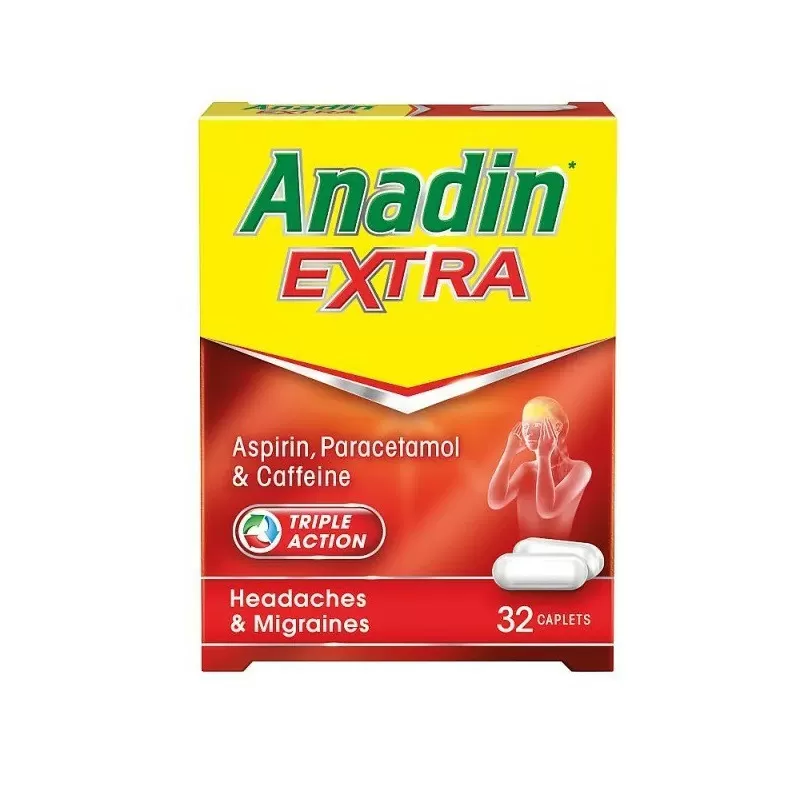
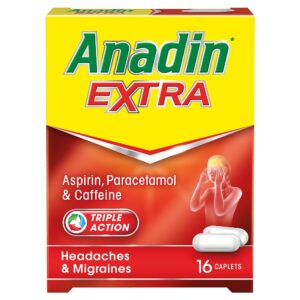
Anadin Extra Caplets – 32 Tablets
£4.63
Anadin Extra Caplets are rapid-action painkiller designed to swiftly alleviate pain and reduce fever
Categories: Age verification, Aspirin, Back Pain, Back Pain, Headaches & Migraines, Medicines, Migraines, Online Shop, Pain Relief, Paracetamol, Shop by Condition
Tags: p-med
You may be interested in these
What is Anadin Extra used for?
Anadin Extra is for effective relief from mild to moderate pain including headache, migraine, toothache, sore throat, period pains, symptomatic relief of sprains, strains, rheumatic pain, nerve pain of the lower back or legs (sciatica), lower back pain (lumbago), influenza, feverishness and feverish colds.
How Anadin Extra works?
Each tablet contains: Aspirin, Paracetamol and Caffeine. Aspirin and paracetamol work by relieving pain and reducing high temperature and fever. Aspirin belongs to a group of medicines called Non-Steroidal Anti-Inflammatory Drugs (NSAIDs) and has anti-inflammatory properties. In addition, your medicine contains caffeine, which increases the pain-relieving effect of the product.
| Weight | 0.062 kg |
|---|---|
| Link Code | 2490514 |
For oral administration and short term use only.
The minimum effective dose should be used for the shortest time necessary to relieve symptoms.
Adults, the elderly and young persons aged over 16
Take 2 tablets up to 4 times a day, as required. The tablets should be taken with water.
Take only as much as you need to relieve your symptoms and leave at least 4 hours between each dose. Do not take more than 8 tablets in any 24 hour period. Do not give to children aged under 16 years, unless on the advice of a doctor.
For migraine indication: not recommended for children and adolescents (under 18 years of age). Do not take with any other paracetamol-containing products. Do not exceed the stated dose.
Side Effects
- Indigestion
- Stomach upset
Serious Side Effects
Breathing problems: Wheezing and breathing difficulties may be triggered in patients suffering from or with a previous history of asthma.
- Unexpected bleeding from the nose, gums, blood in the urine and bruising.
- Severe allergic reactions: Symptoms could include difficulty breathing, skin rash or swollen facial features.
- Serious skin reactions. Symptoms include skin reddening, blisters or rash.
- Liver dysfunction.
- Prolonged bleeding time.
- Temporary hearing loss.
- Fluid retention (swelling of the limbs).
- Abdominal bleeding, abdominal discomfort, gastrointestinal ulceration, indigestion, nausea and vomiting.
- Reye’s syndrome.
- Kidney dysfunction.
- Dizziness and headaches.
- Fluttering heartbeat.
- Insomnia, restlessness, anxiety, irritability and nervousness.
- Metabolic acidosis (serious condition that can make blood more acidic)
If you get any side effects, talk to your doctor, pharmacist or nurse. This includes any possible side effects not listed in this leaflet. You can also report side effects directly via the Yellow Card Scheme, Website www.mhra.gov.uk/yellowcard or search for MHRA Yellow Card in the Google Play or Apple App Store.
By reporting side effects you can help provide more information on the safety of this medicine.
Warning & Precautions
Talk to your pharmacist or your doctor before taking this medicine if you:
- Suffer from asthma, allergic disease, dehydration, have a history of gout, liver or kidney disease (including alcoholic liver disease) or G-6-PD deficiency (an hereditary condition leading to low red blood cell counts).
- Have severe illnesses, including severe renal impairment or sepsis (when bacteria and their toxins circulate in the blood leading to organ damage), suffer from malnutrition, chronic alcoholism or if you are taking flucloxacillin (antibiotic). A serious condition called metabolic acidosis (a blood and fluid abnormality) has been reported in patients in these situations when paracetamol is used at regular doses for a prolonged period or when is taken together with flucloxacillin. Symptoms may include: serious breathing difficulties with deep rapid breathing, drowsiness, feeling sick (nausea) and being sick (vomiting).
- Are pregnant.
- Consumption of alcohol and excessive caffeine intake should be avoided.
Age Restrictions
Aspirin should not be given to children aged under 16 years, unless on the advice of a doctor.
There is a possible association between aspirin and Reye’s syndrome when given to children. Reye’s syndrome is a very rare disease, which affects the brain and liver and can be fatal.
Other Medicines & Conditions
Anadin Extra should not be used together with other non-steroidal anti-inflammatory drugs (NSAIDs).
Please inform your doctor or pharmacist if you are taking:
- Flucloxacillin (antibiotic), due to a serious risk of blood and fluid abnormality (called metabolic acidosis) that must have urgent treatment.
This medicine should also be used with caution when taking the following:
- Other NSAIDS and corticosteroids: Do not use in combination with other NSAIDs as these may increase the risk of adverse effects.
- Medicines to treat blood clots (thrombolytics and anticoagulants) as there is an increased risk of bleeding.
- Medicines used to treat gout (probenecid, sulfinpyrazone) as there may be an increase of aspirin in the patients plasma levels.
- Medicines used to treat high blood pressure due to risk of kidney failure.
- Anti-sickness medicines (metoclopramide) as it may increase the rate of absorption of aspirin.
- Medicines used to treate seizures (phenytoin) as aspirin increases the serum level of phenytoin.
- Medicines used to treat epilepsy and bipolar disorder (valproate) as aspirin inhibits the metabolism of valproate.
- Medicines used to treat rheumatoid arthritis (methotrexate). Use of methotrexate with aspirin, renal function should be measured.
- Medicines used to treat diabetes (sulphonylureas) as aspirin can increase the hypoglycaemic effect.
- Medicines used to treat indigestion (antacids) as use with this medicine may increase the excretion of aspirin.
- Antidepressants (SSRIs) as there is a risk of bleeding in the abdomen medicines to treat high cholesterol (cholestyramine). Paracetamol absorption is reduced.
- Medicines used to treat nausea and vomiting (metoclopramide and domperidone) as paracetamol absorption is increased.
- Medicines used to treat blood clots (warfarin) as there is an increased risk of bleeding.
- Consumption of alcohol and excessive caffeine intake should be avoided.
Pregnancy and Breastfeeding
Not recommended for use in Pregnancy and Breastfeeding
Patient Information Leaflet
https://www.medicines.org.uk/emc/files/pil.101267.pdf
Ingredients
- Active Ingredients:
- Other Ingredients:
Product Information
- Brand Name: Anadin Extra
- Route of Administration: Oral
- Legal Classification: P
- Strength: 300mg Aspirin/200mg Paracetamol/20mg Caffeine
- Dosage Form: Tablet
Storage
- Do not use this medicine after the expiry date shown on the end of the carton.
- Do not store above 25ºC.
- Keep out of sight and reach of children.
Advice & Helpful Links
https://www.nhs.uk/live-well/pain/