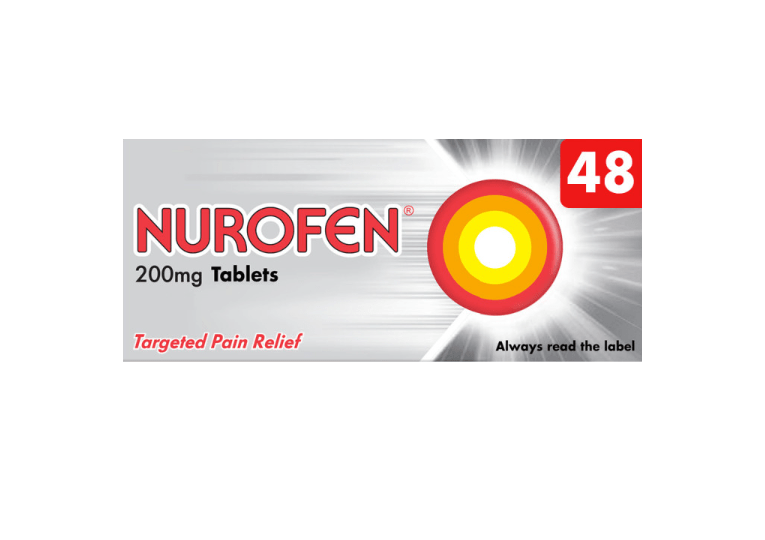
Nurofen 200mg – 48 Tablets
£7.43
Nurofen 200mg Tablets contain Ibuprofen for effective pain relief of headaches, migraines, dental pain, period pain, muscular and back pain.
48 Tablets
Categories: Age verification, Ibuprofen, Medicines, Online Shop, Pain Relief, Shop by Condition, Toothache
Tags: p-med
You may be interested in these
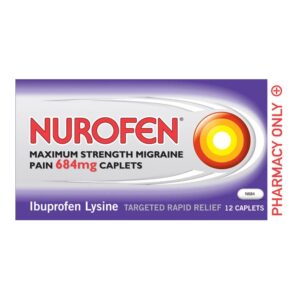
Nurofen 200mg Tablets contain Ibuprofen, which has anti-inflammatory properties and are used for the relief of:
- Headaches and migraine pain
- Dental pain and neuralgia
- Period pain
- Rheumatic, muscular and back pain
- Feverishness and symptoms of cold and flu
How Nurofen 200mg works?
The active ingredient (which makes the medicine work) is Ibuprofen.
It belongs to a group of medicines known as non-steroidal anti-inflammatory drugs (NSAIDs).
NSAIDs provide relief by changing the body’s response to pain, swelling, and high temperature.
| Weight | 0.068 kg |
|---|
How to use Nurofen 200mg tablet:
This product is for short term use only.The lowest effective dose should be used for the shortest duration necessary to relieve symptoms. If you have an infection, consult a doctor without delay if symptoms (such as fever and pain) persist or worsen (see section 2).
Adults, the elderly and children & adolescents between 12 and 18 years: Take 1 or 2 tablets with water, up to three times a day as required.
Leave at least four hours between doses.
Do not take more than 6 tablets in 24 hours.
Do not give to children under 12 years.
In children and adolescents between 12 and 18 years: If in children and adolescents this medicinal product is required for more than 3 days, or if symptoms worsen a doctor should be consulted.
In adults:
Do not take for longer than 10 days unless your doctor tells you to.
If symptoms persist or the pain or fever worsen, or if any new symptoms occur, consult your doctor or pharmacist.
If you have taken more of this medicine than you should, or if children have taken this medicine by accident always contact a doctor or nearest hospital to get an opinion of the risk and advice on action to be taken.
The symptoms can include nausea, stomach pain, vomiting (may be blood streaked), headache, ringing in the ears, confusion and shaky eye movement. At high doses, drowsiness, chest pain, palpitations, loss of consciousness, convulsions (mainly in children), weakness and dizziness, blood in urine, cold body feeling, and breathing problems have been reported.
If you forget to take this medicine. Simply refer to the directions above on how to take the medicine and do not take more than is advised.
Side effects:
Like all medicines, this medicine can cause side effects, although not everybody gets them.
Side effects may be minimised by taking the lowest dose for the shortest time necessary to relieve the symptoms.
Serious side effects:
You may suffer one of the known side effects of NSAIDs (see below). If any of the side effects gets serious, or if you notice any side effects not listed in this leaflet, tell your doctor or
pharmacist.
STOP TAKING the medicine and seek immediate medical help if you
develop:
• signs of intestinal bleeding such as: bright red faeces (stools/motions), black tarry stools, vomiting blood or dark particles that look like coffee grounds.
• signs of serious allergic reaction such as: – difficulties in breathing or unexplained wheezing- dizziness or faster heartbeat- skin reactions such as reddish non-elevated, target-like or circular patches on the trunk, often with central blisters, skin peeling, ulcers of mouth, throat, nose, genitals and eyes. These serious skin rashes can be preceded by fever and flu-like symptoms (exfoliative dermatitis, erythema multiforme, Stevens-Johnson syndrome, toxic epidermal necrolysis). – swelling of your face, tongue or throat
• signs of kidney problems such as: – passing less or more urine – cloudy urine or blood in urine – pain in the back and/or swelling (particularly in the legs)
• signs of aseptic meningitis with neck stiffness, headache, feeling sick, being sick, fever or consciousness. Patients with autoimmune disorders (lupus, mixed connective-tissue disease) may be more likely to be affected.
• a severe skin reaction known as DRESS syndrome can occur. Symptoms of DRESS include: skin rash, fever, swelling of lymph nodes and an increase of eosinophils (a type of white blood cells).
• A red, scaly widespread rash with bumps under the skin and blisters mainly localised on the skin folds, trunk, and upper extremities accompanied by fever at the initiation of treatment (acute generalised exanthematous pustulosis) (frequency not known). See also section 2.
STOP TAKING the medicine and tell your doctor if you experience the following uncommon side effects which may affect up to 1 in 100 people:
• indigestion, heartburn or feeling sick
• pains in your stomach (abdomen) or other abnormal stomach problem Like all medicines, this medicine can cause side-effects, although not everybody
gets them
. Tell your doctor or pharmacist if you notice any of the following:- Liver, kidney problems or difficulty urinating
. This medicine, especially when taken at higher than recommended doses or for a prolonged period of time, can cause damage to your kidneys and affect them
removing acids properly from your blood into the urine (renal tubular acidosis)
.It can also cause very low levels of potassium in your blood.
. This is a very serious condition and will require immediate treatment. Signs and symptoms include muscle weakness and light-headedness
Warnings and precautions:
Taking other medicine .
To reduce the risk of side effects, do not take this product with other NSAID containing products (e.g. aspirin, ibuprofen…). If you are on low-dose aspirin
(up to 75 mg daily), speak to your doctor or pharmacist before you take this medicine.
This medicine may affect or be affected by some other medicines.
For example:
Avoid taking this product with corticosteroid tablets, quinolone antibiotics or drugs that are prescribed:
• medicines that are anti-coagulants (i.e. thin blood/prevent clotting e.g. aspirin/acetylsalicylic acid, warfarin, ticlopidine)
• to stimulate your heart (e.g. glycosides)
• medicines that reduce high blood pressure (ACE-inhibitors such as captopril,beta-blockers such as atenolol medicines, angiotensin-II receptor antagonists such as losartan)
• to help you passing water (diuretics)
• for the temporary suppression of your immune system (e.g. methotrexate, ciclosporin, tacrolimus)
• for mania or depression (e.g. Lithium or SSRIs)
• for pregnancy termination (e.g. mifepristone)
• for HIV treatment (e.g. zidovudine) Some other medicines may also affect or be affected by the treatment of this medicine.
You should therefore always seek the advice of your doctor or pharmacist before you use this medicine with other medicines.
Age restrictions:
Do not give to children under 12 years.
Pregnancy and Breastfeeding:
Tell your doctor if you become pregnant whilst taking Nurofen. Do not take this Medicine if you are in the last 3 months of pregnancy as it could harm your unborn child or cause problems at delivery. It can cause kidney and heart problems in your unborn baby. It may affect your and your baby’s tendency to bleed and cause labour to be later or longer than expected. You should not take this medicine during the first 6 months of pregnancy unless absolutely necessary and advised by your doctor. If you need treatment during this period or while you are trying to get pregnant, the lowest dose for the shortest time possible should be used. If taken for more than a few days from 20 weeks of
pregnancy onward, this medicine can cause kidney problems in your unborn baby that may lead to low levels of amniotic fluid that surrounds the baby (oligohydramnios) or narrowing of a blood vessel (ductus arteriosus) in the heart of the baby. If you need treatment for longer than a few days, your doctor may recommend additional monitoring. Avoid the use of this medicine in the first 6 months of pregnancy, unless the doctor advises otherwise. Speak to your doctor or pharmacist before taking this medicine if you are breastfeeding.
Patient information leaflet link.
https://www.medicines.org.uk/emc/files/pil.5936.pdf
Active Ingredients:
Each tablet or caplet contains the active ingredient Ibuprofen 200 mg.
They also contain: Sucrose, Sodium Citrate,Talc, Croscarmellose Sodium, Stearic Acid,Titanium Dioxide, Silicon Dioxide,Acacia, Carmellose Sodium, Sodium
Laurilsulphate, Macrogol and Black Ink (contains Shellac, Iron Oxide Black (E172) and Propylene Glycol).
Product Information:
Brand name -Nurofen
Route of administration -oral
Legal classification- PMED
Strength- 200mg
Dosage Form – Tablet
Storage- keep all medicines out of the sight and reach of children. Do not use after the expiry date stated on the carton after EXP.
The expiry date refers to the last day of that month. Do not store above 25°C. Store in the original pack.
Advice and Helpfull links –
https://www.nhs.uk/live-well/pain/how-to-get-nhs-help-for-your-pain/