Naproxen are an effective treatment for period pain (dysmenorrhoea) in women aged 16 to 50 years, following a clinical assessment.
Home / Online Clinic / Female Health / Period Pain - Dysmennorhoea / Naproxen 250mg Tablets – Period Pain
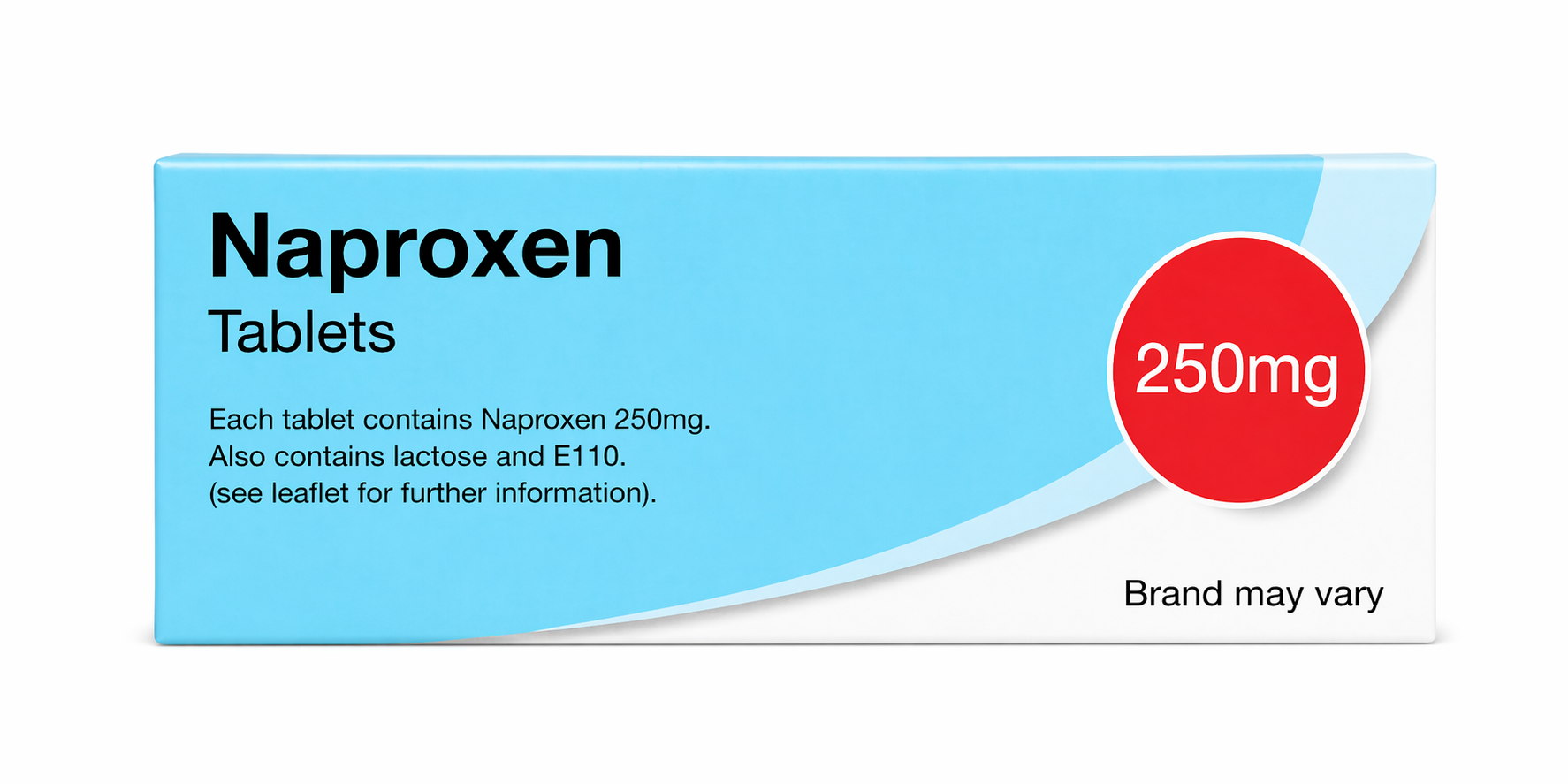
Naproxen 250mg Tablets – Period Pain
£7.99
Please Note: You are also required to complete a form at checkout. In addition, a video consultation with our pharmacist may be required.
Payment does not guarantee approval or supply
All prescription medication (Online Clinic) requests are subject to an independent clinical assessment. The final decision, including the medication and dose prescribed, rests with the prescriber. If your request is declined and no medication is supplied, your payment will be refunded in full in accordance with our refund policy.
Categories: Age verification, Female Health, Online Clinic, Period Pain - Dysmennorhoea
Tags: ID Required, PGD
What are Naproxen 250mg Tablets used for?
Naproxen 250mg Tablets are used to treat period pain (dysmenorrhoea) in women aged 16 to 50 years. They help relieve menstrual cramps and discomfort associated with the menstrual cycle.
Naproxen belongs to a group of medicines called non-steroidal anti-inflammatory drugs (NSAIDs). It works by reducing the production of substances in the body that cause pain and inflammation. Regular use during a menstrual period can help relieve symptoms such as lower abdominal pain, cramping, and pelvic discomfort. Naproxen Tablets should only be used for period pain as initiated by a clinician.
How Naproxen 250mg Tablets work
Naproxen contains the active ingredient naproxen, which belongs to a group of medicines known as non-steroidal anti-inflammatory drugs (NSAIDs).
It works by reducing the production of prostaglandins, chemicals in the body that cause pain, swelling and inflammation during menstruation.
By lowering these prostaglandin levels, Naproxen helps reduce uterine muscle contractions and inflammation, providing relief from menstrual cramps and associated discomfort.
| Quantity | 10 Tablets |
|---|
Always use this medicine exactly as your doctor or pharmacist has told you. Check with your doctor or pharmacist if you are not sure how to use this medicine.
The recommended dose for adults:
Take 500mg initially followed by 250mg at 6-8 hours interval as needed. Take with or after food.
The maximum daily dose after the first day is 750mg (tablets). This can be taken for up to 3 days in one cycle.
If you take more Naproxen Tablets than you should
If you take more Naproxen Tablets than you should, talk to your doctor or go to a hospital straight away. Take the medicine pack with you.
If you forget to take Naproxen Tablet
If you forget to take a dose, skip the missed dose. Then take next dose as normal. Do not take double dose to make up for a forgotten dose.
Like all medicines, this medicine can cause side effects, although not everybody gets them. Some of the side effects are temporary with continued treatment or disappeared when treatment is stopped.
Side Effects
Common
- Gastrointestinal symptoms, such as nausea, vomiting, diarrhoea, constipation, abdominal discomfort
Other Effects
- Stomach and gut: Heartburn, indigestion, stomach ache, feeling sick or being sick, constipation, diarrhoea, wind.
- Blood: Blood problems, like anaemia or changes to the numbers of white blood cells.
- Mental illness: Having difficulty sleeping or changes in your patterns of dreaming, Depression, Confusion or seeing and possibly hearing things that are not there (hallucinations).
- Nervous system: Headache, Fits or seizures, feeling dizzy or light-headed or sleepy, Pins and needles or numbness of your hands and feet, Difficulty with your memory or concentration.
- Eyes and ears: Changes to your eyesight, eye pain, Changes to your hearing, including ringing in the ears (tinnitus) and hearing loss, Dizziness that causes problems with your balance, Heart and circulation, Swelling of your hands, feet or legs (oedema), this may be with chest pains, tiredness, shortness of breath (cardiac failure), A fluttering feeling in your heart (palpitations), slow heart beat or high blood pressure, Problems with the way your heart pumps blood around the body or damage to your blood vessels. Signs may include tiredness, shortness of breath, feeling faint, general pain.
- Chest: Difficulty breathing, including shortness of breath, wheezing or coughing, Pneumonia or swelling of your lungs.
- Skin and hair: Skin rashes including redness, hives, pimples and blisters on your body and face, Bruising, itching, sweating, skin being more sensitive to the sun or hair loss.
- Urinary: Blood in your water (urine) or kidney problems.
Other
- Thirst, fever, feeling tired or generally unwell.
- A sore mouth or mouth ulcers.
- Muscle pain or weakness.
- Problems for women in getting pregnant.
- ‘Systemic lupus erythematosus’ (SLE). Signs include fever, rash, problems with your kidneys and joint pain.
If any of the side effects gets serious, or if you notice any side effects not listed in this leaflet, please tell your doctor or pharmacist.
Serious Side Effects
Stop taking Naproxen Tablet and tell a doctor straight away if any of the following side effects happen. You may need urgent medical treatment:
Serious stomach or gut problems, signs include:
- Bleeding from the stomach, seen as vomit which has blood in it, or bits that look like coffee grounds.
- Bleeding from your back passage (anus), seen as passing black sticky bowel motions (stools) or bloody diarrhoea.
- Ulcers or holes forming in your stomach or gut. Signs include upset stomach, stomach pain, fever, feeling or being sick.
- Problems with your pancreas. Signs include severe stomach pain which spreads to your back.
- Worsening of ulcerative colitis or Crohn’s disease, seen as pain, diarrhoea, vomiting and weight loss.
Allergic reactions, signs include:
- Sudden swelling of your throat, face, hands or feet.
- Difficulty breathing, tightness in your chest.
- Skin rashes, blisters or itching.
Severe skin rashes, signs include:
- A severe rash that develops quickly, with blisters or peeling of your skin and possibly blisters in your mouth, throat or eyes. Fever, headache, cough and aching body may happen at the same time.
- Blistering of skin when exposed to sunlight (porphyria cutanea tarda) seen most on arms, face and hands.
Liver problems, signs include:
- Yellowing of your skin or the whites of your eyes (jaundice).
- Feeling tired, loss of appetite, feeling or being sick and pale coloured stools (hepatitis) and problems (including hepatitis), shown in blood tests.
Heart attack, signs include:
- Chest pain which may spread to your neck and shoulders and down your left arm.
Stroke, signs include:
- Muscle weakness and numbness. This may only be on one side of your body.
- A suddenly altered sense of smell, taste, hearing or vision, confusion.
Meningitis, signs include:
- Fever, feeling or being sick, a stiff neck, headache, sensitivity to bright light and confusion (most likely in people with autoimmune conditions such as ‘systemic lupus erythematosus’).
If you notice any of the serious side effects mentioned above, stop taking Naproxen Tablet and tell your doctor straight away.
If you get any side effects, talk to your doctor or pharmacist. This includes any possible side effects not listed in this leaflet. You can also report side effects directly via the Yellow Card Scheme at www.mhra.gov.uk/yellowcard or search for MHRA Yellow Card in the Google Play or Apple App Store. By reporting side effects you can help provide more information on the safety of this medicine.
Warning & Precautions
Do not take Naproxen Tablet if you are allergic (hypersensitive) to:
- Naproxen or any of the other ingredient of Naproxen Tablet.
- Aspirin, other NSAIDs or any other pain relief medicines (such as ibuprofen or diclofenac).
Do not take Naproxen Tablet if:
- You have now or have ever had any problems with your stomach or gut (intestine) like an ulcer or bleeding.
- You have previously experienced bleeding or perforation in your stomach while taking NSAIDs.
- You have severe problems with your kidneys, liver or heart.
- You are in the last three months of pregnancy.
Do not take Naproxen Tablet if any of the above apply to you. If you are not sure, talk to your doctor or pharmacist before taking Naproxen Tablet.
If you have heart problems, previous stroke or think that you might be at risk of these conditions (for example if you have high blood pressure, diabetes or high cholesterol or are a smoker) you should discuss your treatment with your doctor or pharmacist.
Talk to your doctor or pharmacist before taking Naproxen Tablet if any of the following apply to you:
- Asthma or allergies (like hayfever) or have had swelling of the face, lips, eyes or tongue in the past.
- A feeling of weakness (perhaps because of an illness) or you are an older person.
- Lumps in your nose (polyps) or you sneeze a lot or have a runny, blocked, or itchy nose (rhinitis).
- Problems with your kidneys or liver.
- Problems with the way that your blood clots.
- Problems with the blood vessels (arteries) anywhere in your body.
- Too much fat (lipid) in your blood (hyperlipidaemia).
- An autoimmune condition, such as ‘systemic lupus erythematosus’ (SLE, causes joint pain, skin rashes and fever) and colitis or Crohn’s disease (conditions causing inflammation of the bowel, bowel pain, diarrhoea, vomiting and weight loss).
If any of the above apply to you, or if you are not sure, talk to your doctor or pharmacist before you take Naproxen Tablet.
Serious skin reactions including (Stevens-Johnson syndrome, toxic epidermal necrolysis, drug reaction with eosinophilia and systemic Symptoms (DRESS) have been reported in association with Naproxen tablets. Stop using Naproxen tablets and seek medical attention immediately if you notice any of the symptoms related to these serious skin reactions described.
Age Restrictions
Women aged between 16 and 50 years old.
Other Medicines and Conditions
Tell your doctor or pharmacist if you are taking, have recently taken or might take any other medicines. This includes medicines that you buy without a prescription and herbal medicines.
In particular, tell your doctor or pharmacist if you are taking:
- Other pain killers, like aspirin, ibuprofen, diclofenac and paracetamol.
- Medicine to stop your blood clotting, like, asprin/ acetylsalicylic acid, warfarin, heparin or clopidogrel.
- A hydantoin (for epilepsy), like phenytoin.
- Sulfonamide medicines, like hydrochlorothiazide, acetazolamide, indapamide and including sulfonamide antibiotics (for infections).
- A sulfonylurea (for diabetes), like glimepiride or glipizide.
- An ‘ACE inhibitor’ or any other medicine for high blood pressure like cilazapril, enalapril or propranolol.
- An angiotensin-II receptor antagonist, like candesartan, eprosartan or losartan.
- A diuretic (water tablet) (for high blood pressure), like furosemide.
- A ‘cardiac glycoside’ (for heart problems), like digoxin.
- A steroid (for swelling and inflammation), like hydrocortisone, prednisolone and dexamethasone.
- A ‘quinolone antibiotic’ (for infections), like ciprofloxacin or moxifloxacin.
- Certain medicines for mental health problems like lithium or ‘SSRIs’ like fluoxetine or citalopram.
- Probenecid (for gout).
- Methotrexate (used to treat skin problems, arthritis or cancer).
- Ciclosporin or tacrolimus (for skin problems or after an organ transplant).
- Zidovudine (used to treat AIDS and HIV infections).
- Mifepristone (used to end pregnancy or to bring on labour if the baby has died).
If any of the above apply to you, or if you are not sure, talk to your doctor or pharmacist before you take Naproxen Tablet.
Driving and using machines
Naproxen Tablet may make you tired, drowsy, dizzy, have problems with your eyesight and balance, depressed or have difficulty sleeping. Talk to your doctor if any of these happen to you and do not drive or use any tools or machines.
Pregnancy and Breastfeeding
This medicine is not suitable for use in pregnancy and breastfeeding.
Patient Information Leaflet
https://www.medicines.org.uk/emc/files/pil.1130.pdf
Ingredients
- Active Ingredients: Naproxen
- Other Ingredients: Povidone, magnesium stearate, croscarmellose sodium, Colloidal anhydrous silica and Ferric oxide.
Product Information
- Brand Name: Naproxen (Generic)
- Route of Administration: Oral
- Legal Classification: Prescription Only Medication (POM)
- Strength: 250mg
- Dosage From: Tablet
Storage
- Keep this medicine out of the sight and reach of children.
- Store in original package in order to protect from light. Store below 30 °C.
- Do not use Naproxen Tablet after the expiry date printed on the pack. The expiry date refers to the last day of that month.
- Do not throw any medicines via wastewater or household waste. Ask your pharmacist how to throw away medicines you no longer use. These measures will help protect the environment
Advice & Helpful Links