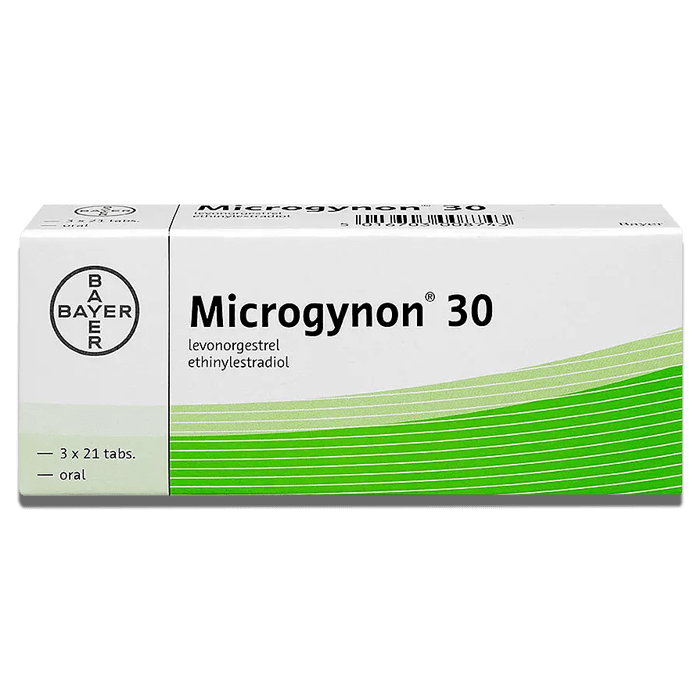
Microgynon
£15.16
Microgynon 30 is an effective combined oral contraceptive pill for women aged 16 years and over, following a clinical assessment.
It contains ethinylestradiol and levonorgestrel, two hormones that work together to prevent pregnancy by stopping ovulation, thickening cervical mucus to make it harder for sperm to reach an egg, and changing the lining of the womb to reduce the chance of implantation.
Please Note: You are also required to complete a form at checkout. In addition, a video consultation with our pharmacist may be required.
Payment does not guarantee approval or supply
All prescription medication (Online Clinic) requests are subject to an independent clinical assessment. The final decision, including the medication and dose prescribed, rests with the prescriber. If your request is declined and no medication is supplied, your payment will be refunded in full in accordance with our refund policy.
Out of stock
This product is currently out of stock.
Categories: Age verification, Contraception, Female Health, Online Clinic
Tags: ID Required, Private Rx
What is Microgynon 30 used for?
Microgynon 30 is a combined oral contraceptive pill used to prevent pregnancy. It contains two female sex hormones, ethinylestradiol (an oestrogen) and levonorgestrel (a progestogen), which work together to provide effective contraception when taken correctly.
Microgynon 30 is taken once daily for 21 days, followed by a 7-day pill-free break. When used as directed, it is one of the most reliable reversible methods of contraception available.
Microgynon 30 does not protect against sexually transmitted infections (STIs). Condoms should be used to help reduce the risk of STIs, including chlamydia and HIV.
How Microgynon 30 works
Microgynon 30 contains the active ingredients ethinylestradiol and levonorgestrel, which belong to a group of medicines known as combined hormonal contraceptives.
It works in three ways to help prevent pregnancy:
- By preventing the release of an egg from the ovaries each month (ovulation)
- By thickening the mucus in the cervix, making it more difficult for sperm to enter the womb
- By changing the lining of the womb, making it less likely that a fertilised egg can implant
When taken correctly every day, Microgynon 30 provides highly effective protection against pregnancy.
| Quantity | 3 months, 6 months |
|---|
Always use this medicine exactly as your doctor or pharmacist has told you. Check with your doctor or pharmacist if you are not sure how to use this medicine.
The recommended dose for adults:
Take one daily for 21 days, followed by a 7 day pill free interval.
- Take your pill at the same time every day.
- Start by taking a pill marked with the correct day of the week.
- Follow the direction of the arrows on the strip. Take one pill each day, until you have finished all 21 pills.
- Swallow each pill whole, with water if necessary. Do not chew the pill.
Seven pill free days
After you have taken all 21 pills in the strip, you have seven days when you take no pills. So if you take the last pill of one pack on a Friday, you will take the first pill of your next pack on the Saturday of the following week. Within a few days of taking the last pill from the strip, you should have a withdrawal bleed like a period. This bleed may not have finished when it is time to start your next strip of pills. You don’t need to use extra contraception during these seven pill-free days – as long as you have taken your pills correctly and start the next strip of pills on time.
Start your next strip
Start taking your next strip of Microgynon 30 after the seven pill-free days – even if you are still bleeding. Always start the new strip on time. As long as you take Microgynon 30 correctly, you will always start each new strip on the same day of the week.
A missed pill – When were you due to take the missed pill?
<12 hours ago
Take the delayed pill straight away and further pills as usual. This may mean taking two pills in one day. Your contraception should not be compromised.
>12 hours ago, or you have missed more than one pill
- Take the most recently missed pill straight away. Leave any earlier missed pills in the strip.
- Take your further pills as usual. This may mean taking 2 pills in one day.
- Use extra protection (condom), for the next 7 days.
- Check how many pills are left in the strip after the most recently missed pill
7 or more left in the pack, use extra protection for the next 7 days
- When you have finished the strip, leave the usual 7-day break before starting the next strip.
- If you have missed one or more pills from the first week of your strip (days 1 to 7) and you have had intercourse during that week, protection may be compromised. Contact your doctor or pharmacist for advice as soon as possible. You may required emergency contraception.
Fewer than 7 pills left in the pack
- Use extra protection for the next 7 days.
- When you finish the strip off, start the next strip the following day without the 7-day break.
- If you do not have a withdrawal bleed after you have finished the second strip, take a pregnancy test before starting your next strip.
- If you have have missed one or more pills from the first week of your strip (days 1 to 7) and you have had intercourse during that week, protection may be compromised. Contact your doctor or pharmacist for advice as soon as possible.
A lost pill
If you lose a pill, either take the last pill of the strip in place of the lost pill. Then take all the other pills on their proper days. Your cycle will be one day shorter than normal, but your contraceptive protection won’t be affected. After your seven pill-free days you will have a new starting day, one day earlier than before.
If you do not want to change the starting day of your cycle, take a pill from a spare strip if you have one. Then take all the other pills from your current strip as usual. You can then keep the opened spare strip in case you lose any more pills.
If you are sick or have diarrhoea
If you are sick (vomit) or have very bad diarrhoea within 4 hours of taking the pill, your body may not get its usual dose of hormones from that pill. If you are better within 12 hours of taking Microgynon 30, follow the instructions above in A lost pill, which describes how to take another pill.
If you are still sick or have diarrhoea more than 12 hours after taking Microgynon 30 see A missed pill. Talk to your doctor if your stomach upset carries on or gets worse. He or she may recommend another form of contraception.
Taking more than one pill
It is unlikely that taking more than one pill will do you any harm, but you may feel sick, vomit or have some vaginal bleeding.
Even girls who have not yet started to menstruate but have accidentally taken this medicine may experience such bleeding.
Talk to your doctor if you have any of these symptoms.
Like all medicines, this medicine can cause side effects, although not everybody gets them. Some of the side effects are temporary with continued treatment or disappeared when treatment is stopped.
Side Effects
Common
- feeling sick
- stomach ache
- putting on weight
- headaches
- depressive moods or mood swings
- sore or painful breasts
Uncommon
- being sick and stomach upsets
- fluid retention
- migraine
- loss of interest in sex
- breast enlargement
- skin rash, which may be itchy
Rare
- poor tolerance of contact lenses
- losing weight
- increase of interest in sex
- vaginal or breast discharge
Serious Side Effects
If you get any side effect, particularly if severe and persistent, or have any change to your health that you think may be due to Microgynon 30, please talk to your doctor.
Rare
- harmful blood clots in a vein or artery
Signs of a blood clot
The chance of having a blood clot may be higher if you have any other conditions that increase this risk. Contact a doctor immediately if you experience any of the following symptoms of angioedema: swollen face, tongue and/or throat and/or difficulty swallowing or hives potentially with difficulty breathing
Signs of a severe allergic reaction:
- swelling of the hands, face, lips, mouth, tongue or throat
- swollen tongue/throat may lead to difficulty swallowing and breathing
- a red bumpy rash (hives) and itching
Signs of breast cancer include:
- dimpling of the skin
- changes in the nipple
- any lumps you can see or feel
Signs of cancer of the cervix include:
- vaginal discharge that smells and/or contains blood
- unusual vaginal bleeding
- pelvic pain
- painful sex
- Signs of severe liver problems include:
- severe pain in your upper abdomen
- yellow skin or eyes (jaundice)
- inflammation of the liver (hepatitis)
- your whole body starts itching
If you think you may have any of these, see a doctor straight away. You may need to stop taking Microgynon 30.
If you get any side effects, talk to your doctor or pharmacist. This includes any possible side effects not listed in this leaflet. You can also report side effects directly via the Yellow Card Scheme at www.mhra.gov.uk/yellowcard or search for MHRA Yellow Card in the Google Play or Apple App Store. By reporting side effects you can help provide more information on the safety of this medicine.
Warning & Precautions
Seek urgent medical attention – if you notice possible signs of a blood clot that may mean you are suffering from a blood clot in the leg (i.e. deep vein thrombosis), a blood clot in the lung (i.e. pulmonary embolism), a heart attack or a stroke
Tell your doctor if any of the following conditions apply to you. If the condition develops, or gets worse while you are using Microgynon 30, you should also tell your doctor.
- If you experience symptoms of angioedema such as swollen face, tongue and/or throat and/or difficulty swallowing or hives potentially with difficulty breathing contact a doctor immediately. Products containing oestrogens may cause or worsen the symptoms of hereditary and acquired angioedema.
- If you have Crohn’s disease or ulcerative colitis (chronic inflammatory bowel disease)
- If you have systemic lupus erythematosus (SLE – a disease affecting your natural defence system)
- If you have haemolytic uraemic syndrome (HUS – a disorder of blood clotting causing failure of the kidneys)
- If you have sickle cell anaemia (an inherited disease of the red blood cells)
- If you have inflammation of the pancreas (pancreatitis)
- If you have elevated levels of fat in the blood (hypertriglyceridaemia) or a positive family history for this condition.- Hypertriglyceridaemia has been associated with an increased risk of developing pancreatitis (inflammation of the pancreas)
- If you need an operation, or you are off your feet for a long time
- If you have just given birth you are at an increased risk of blood clots. You should ask your doctor how soon after delivery you can start taking Microgynon 30
- If you have an inflammation in the veins under the skin (superficial thrombophlebitis)
- If you have varicose veins
- If you have diabetes
- If you or your close family have ever had problems with your heart, or circulation such as high blood pressure
- If you or your close family have ever had problems with blood clotting
- If you have the inherited disease called porphyria
- If you are overweight (obese)
- If you have migraines
- If you have any illness that worsened during pregnancy or previous use of the pill
Before you start taking the Pill
Your doctor will ask about you and your family’s medical problems, check your blood pressure and exclude the likelihood of you being pregnant. You may also need other checks, such as a breast examination, but only if these examinations are necessary for you, or if you have any special concerns.
While you’re on the Pill
- You will need regular check-ups with your doctor or family planning nurse, usually when you need another prescription of the Pill
- You should go for regular cervical smear tests
- Check your breasts and nipples every month for changes – tell your doctor if you can see or feel anything odd, such as lumps or dimpling of the skin.
- If you need a blood test tell your doctor that you are taking the Pill, because the Pill can affect the results of some tests.
- If you’re going to have an operation, make sure your doctor knows about it. You may need to stop taking the Pill at least 4 weeks before the operation. This is to reduce the risk of a blood clot. Your doctor will tell you when you can start taking the Pill again.
Age Restrictions
Age 16 and above only
Other Medicines and Conditions
If you ever need to take another medicine at the same time as being on the pill, always tell your doctor, pharmacist or dentist that you’re taking Microgynon 30. Also check the leaflets that come with all your medicines to see if they can be taken with hormonal contraceptives.
Some medicines can have an influence on the blood levels of Microgynon 30 and can stop it from working properly, for example:
- some medicines used to treat epilepsy
- some medicines used to treat HIV and Hepatitis C Virus infections (so-called protease inhibitors and non-nucleoside reverse transcriptase inhibitors)
- griseofulvin (an anti-fungal medicine)
- certain antibiotics
- certain sedatives (called barbiturates)
- St. John’s Wort (a herbal remedy)
If you do need to take one of these medicines, Microgynon 30 may not be suitable for you or you may need to use extra contraception for a while. Your doctor, pharmacist or dentist can tell you if this is necessary and for how long.
Microgynon 30 can also affect how well other medicines work. Your doctor may need to adjust the dose of your other medicine. In addition, Microgynon 30 can also interfere with the results of some blood tests, so always tell your doctor that you are taking Microgynon 30 if you have a blood test.
Do not use Microgynon 30 if you have hepatitis C and are taking medicinal products containing ombitasvir/paritaprevir/ritonavir, dasabuvir, glecaprevir/pibrentasvir or sofosbuvir/velpatasvir/voxilaprevir, as these products may cause increases in liver function blood test results (increase in ALT liver enzyme).
Your doctor will prescribe another type of contraceptive prior to start of the treatment with these medicinal products. Microgynon 30 can be restarted approximately 2 weeks after completion of this treatment.
When you should not use Microgynon 30
You should not use Microgynon 30 if you have any of the conditions listed below. If you do have any of the conditions listed below, you must tell your doctor. Your doctor will discuss with you what other form of birth control would be more appropriate.
Do not use Microgynon 30
- If you have (or have ever had) a blood clot in a blood vessel of your legs (deep vein thrombosis, DVT), your lungs (pulmonary embolus, PE) or other organs
- If you know you have a disorder affecting your blood clotting – for instance, protein C deficiency, protein S deficiency, antithrombin-III deficiency, Factor V Leiden or antiphospholipid antibodies
- If you need an operation or if you are off your feet for a long time
- If you have ever had a heart attack or stroke
- If you have (or have ever had) angina pectoris (a condition that causes severe chest pain and may be a first sign of a heart attack) or transient ischaemic attack (TIA – temporary stroke symptoms)
- If you have any of the following diseases that may increase your risk of a clot in the arteries: severe diabetes with blood vessel damage, very high blood pressure a very high level of fat in the blood (cholesterol or triglycerides) a condition known as hyperhomocysteinaemia
- If you have (or have ever had) a type of migraine called ‘migraine with aura’
- If you have or have ever had breast cancer If you have ever had a severe liver disease, and you have been told by your doctor that your liver function test results are not yet back to normal ▪ If you have ever had liver tumours
- If you are allergic (hypersensitive) to any of the ingredients in Microgynon 30.
Do not use Microgynon 30 if you have hepatitis C and are taking medicinal products containing ombitasvir/paritaprevir/ritonavir, dasabuvir, glecaprevir/pibrentasvir or sofosbuvir/velpatasvir/voxilaprevir
Blood clots
Using a combined hormonal contraceptive such as Microgynon 30 increases your risk of developing a blood clot compared with not using one. In rare cases a blood clot can block vessels and cause serious problems.
Blood clots can develop:
- in veins (referred to as a ‘venous thrombosis’, ‘venous thromboembolism’ or VTE)
- in the arteries (referred to as an ‘arterial thrombosis’, ‘arterial thromboembolism’ or ATE).
Recovery from blood clots is not always complete. Rarely, there may be serious lasting effects or, very rarely, they may be fatal. It is important to remember that the overall risk of having a harmful blood clot due to Microgynon 30 is small.
See a doctor as soon as possible. Do not take any more Microgynon 30 until your doctor says you can. Use another method of contraception, such as condoms, in the meantime.
Please read the patient information leaflet or speak to your prescriber regarding signs and symptoms of a blood clot.
Psychiatric disorders
Some women using hormonal contraceptives including Microgynon 30 have reported depression or depressed mood. Depression can be serious and may sometimes lead to suicidal thoughts. If you experience mood changes and depressive symptoms contact your doctor for further medical advice as soon as possible.
Pregnancy and Breastfeeding
Do not use Microgynon 30 if you are pregnant. If you think you might be pregnant, do a pregnancy test to confirm that you are before you stop taking Microgynon 30. If you are breast-feeding, your doctor or family planning nurse may advise you not to take Microgynon 30. They will be able to suggest alternative contraception. Breast-feeding may not stop you getting pregnant.
Missed a period – could you be pregnant?
Occasionally, you may miss a withdrawal bleed. This could mean that you are pregnant, but that is very unlikely if you have taken your pills correctly. Start your next strip at the normal time. If you think that you might have put yourself at risk of pregnancy (for example, by missing pills or taking other medicines), or if you miss a second bleed, you should do a pregnancy test. You can buy these from the chemist or get a free test at your family planning clinic or doctors surgery. If you are pregnant, stop taking Microgynon 30 and see your doctor.
When you want to get pregnant
If you are planning a baby, it’s best to use another method of contraception after stopping Microgynon 30 until you have had a proper period. Your doctor or midwife relies on the date of your last natural period to tell you when your baby is due. However, it will not cause you or the baby any harm if you get pregnant straight away.
Starting Microgynon 30 after a miscarriage or abortion
If you have had a miscarriage or an abortion during the first three months of pregnancy, your doctor may tell you to start taking Microgynon 30 straight away. This means that you will have contraceptive protection with your first pill.
If you have had a miscarriage or an abortion after the third month of pregnancy, ask your doctor for advice. You may need to use extra contraception, such as condoms, for a short time. Contraception after having a baby If you have just had a baby, your doctor may advise you that Microgynon 30 should be started 21 days after delivery provided that you are fully mobile. You do not have to wait for a period. You will need to use another method of contraception, such as a condom, until you start Microgynon 30 and for the first 7 days of pill taking.
Patient Information Leaflet
https://www.medicines.org.uk/emc/files/pil.101273.pdf
Ingredients
- Active Ingredients: 150mcg Levonorgestrel/30mcg Ehinylestradiol
- Other Ingredients: Lactose, maize starch, povidone, magnesium stearate (E572), sucrose, macrogol 6000, calcium carbonate (E170), talc, glycol montanate, titanium dioxide (E171), glycerin (E422), ferric oxide pigment yellow (E172).
Product Information
- Brand Name: Micogynon 30
- Route of Administration: Oral
- Legal Classification: Prescription Only Medication (POM)
- Strength: 150mcg Levonorgestrel/30mcg Ehinylestradiol
- Dosage From: Tablet
Storage
- Keep this medicine out of the sight and reach of children.
- Do not use Microgynon 30 after the expiry date which is stated on the strip after EXP. The expiry date refers to the last day of that month.
- Do not throw away any medicines via wastewater or household waste. Ask your pharmacist how to throw away medicines you no longer use. These measures will help protect the environment.
Advice & Helpful Links