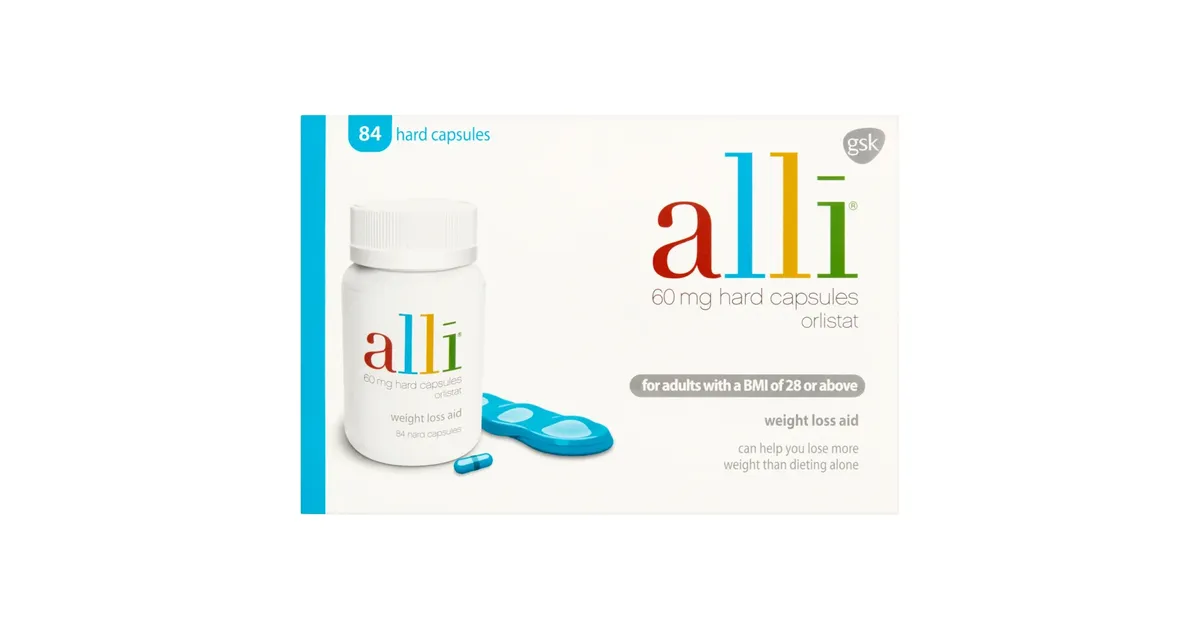
Alli 60mg – Pack of 84
£48.50
Alli is an oral medication used to support weight loss and weight management in eligible adult patients aged 18 years and over who are overweight.
It works by blocking the enzymes responsible for breaking down fat in the digestive system, reducing the amount of fat absorbed from food. This helps to lower overall calorie intake. Alli 60 mg is used alongside a healthy, reduced-calorie, low-fat diet and lifestyle, following an appropriate clinical assessment.
Please Note: You are also required to complete a form at checkout. In addition, a video consultation with our pharmacist may be required.
Payment does not guarantee approval or supply
All prescription medication (Online Clinic) requests are subject to an independent clinical assessment. The final decision, including the medication and dose prescribed, rests with the prescriber. If your request is declined and no medication is supplied, your payment will be refunded in full in accordance with our refund policy.
17 in stock
Categories: Online Clinic, Oral Weight Loss, Weight Management
Tags: ID Required, p-med, PGD, Weight Management
What is Alli 60 mg used for?
Alli 60 mg hard capsules contain the active ingredient orlistat and are used to support weight loss in adults aged 18 years and over who are overweight, with a body mass index (BMI) of 28 or above.
It should be used alongside a reduced-calorie, lower-fat diet.
Being overweight can increase the risk of health problems such as heart disease and diabetes. Alli helps reduce the amount of fat absorbed from food, supporting weight loss and improving overall health.
How Alli 60 mg works
Alli contains orlistat and belongs to a group of medicines known as peripherally acting anti-obesity agents (lipase inhibitors). It works by targeting fat in your digestive system and blocking enzymes (lipases) that break down fat.
As a result, about a quarter of the fat consumed in your meals is not absorbed and is instead passed out of the body in the stool. Because of this, it is important to follow a lower-fat diet to help manage potential digestive side effects. By reducing fat absorption, Alli supports gradual weight loss. When combined with dieting, it may help you lose more weight compared to dieting alone.
| Weight | 0.149 kg |
|---|
Always use this medicine exactly as your doctor or pharmacist has told you. Check with your doctor or pharmacist if you are not sure how to use this medicine.
The recommended dose for adults:
Take one capsule, three times a day. Swallow the capsule whole with water.
Take alli just before, during or up to one hour after meals. This usually means one capsule at breakfast, lunch and dinner.
Make sure your three main meals are well balanced, reduced calorie, and lower-fat. If you miss a meal, or your meal contains no fat, do not take a capsule. alli does not work unless there is some fat in the meal.
Eat lower-fat meals to reduce the chance of diet-related treatment effects.
How long should I take alli for?
Alli should not be taken for more than six months. If you do not lose weight after taking alli for 12 weeks, see your doctor or pharmacist for advice. You may need to stop taking alli.
If you take more alli than you should
Do not take more than 3 capsules a day.
If you have taken too many capsules, contact a doctor as soon as possible.
If you forget to take alli
If you miss taking a capsule:
- If it is less than an hour since your last main meal, take the missed capsule.
- If it is more than an hour since your last main meal, do not take the missed capsule. Wait and take the next capsule around your next main meal as usual.
Like all medicines, this medicine can cause side effects, although not everybody gets them. Some of the side effects are temporary with continued treatment or disappeared when treatment is stopped.
Side Effects
Very Common
- Headache
- Abdominal pain/discomfort
- Urgent or increased need to open the bowels
- Flatulence (wind) with discharge, oily discharge, oily or fatty stools, liquid stools
- Low blood sugar levels (experienced by some people with type 2 diabetes)
Common
- Rectal pain/discomfort
- Soft stools
- Incontinence (stools)
- Bloating (experienced by some people with type 2 diabetes)
- Tooth/gum disorder,
- Irregularity of menstrual cycle
- Tiredness
Frequency Not Known
- Diverticulitis
- Bleeding from the back passage
- Increases in the levels of some liver enzymes may be found in blood tests
- Gallstones
- Skin blistering (including blisters that burst)
- Pancreatitis (inflammation of the pancreas)
- Oxalate nephropathy (build up of calcium oxalate which may lead to kidney stones)
- Effects on clotting with anti-coagulants
Serious Side Effects
- Allergic reactions. The main symptoms are itching, rash, wheals (slightly elevated, itchy skin patches that are paler or redder than surrounding skin), severe difficulty in breathing, nausea, vomiting and feeling unwell
- Hepatitis (inflammation of the liver). Symptoms can include yellowing skin and eyes, itching, dark coloured urine, stomach pain and liver tenderness (indicated by pain under the front of the rib cage on your right hand side), sometimes with loss of appetite
If you get any side effects, talk to your doctor or pharmacist. This includes any possible side effects not listed in this leaflet. You can also report side effects directly via the Yellow Card Scheme at www.mhra.gov.uk/yellowcard or search for MHRA Yellow Card in the Google Play or Apple App Store. By reporting side effects you can help provide more information on the safety of this medicine.
Warning & Precautions
Do not take Alli:
- if you are allergic (hypersensitive) to Alli or to any of the other ingredients of Alli
- ifyou have chronic malabsorption syndrome (insufficient absorption of nutrients from alimentary tract)
- if you have cholestasis (liver disorder)
- if you are breast-feeding
Weight loss may also affect the dose of medicines taken for other conditions (e.g. high cholesterol or diabetes). Be sure to discuss these and other medicines you may be taking with your doctor. Losing weight may mean you need adjustments to the dose of these medicines.
To gain the maximum benefit from Alli you should follow the nutrition program recommended to you by your doctor. As with any weight-control program, over-consumption of fat and calories may reduce any weight loss effect.
This medicine can cause harmless changes in your bowel habits, such as fatty or oily stools, due to the elimination of undigested fat in your faeces. The possibility of this happening may increase if Alli is taken with a diet high in fat. In addition your daily intake of fat should be distributed evenly over three main meals because if Alli is taken with a meal very high in fat, the possibility of gastrointestinal effects may increase.
The use of an additional contraceptive method is recommended to prevent possible failure of oral contraception that could occur in case of severe diarrhoea.
The use of Alli may be associated with renal stones in patients suffering from chronic kidney disease. Inform your doctor whether you suffer from problems with your kidney.
Age Restrictions
Alli is supplied to eligible patients aged 18 to 75 years, where treatment is considered clinically appropriate.
Other Medicines and Conditions
Please inform your doctor or pharmacist if you are taking or have recently taken any other medicines, even those not prescribed.
This is important as using more than one medicine at the same time can strengthen or weaken the effects of the medicines.
Alli may modify the activity of:
- Anticoagulant drugs (e.g. warfarin). Your doctor may need to monitor your blood coagulation.
- Ciclosporin. Co-administration with ciclosporin is not recommended. Your doctor may need to monitor your ciclosporin blood levels more frequently than usual.
- Iodine salts and/or levothyroxine. Cases of hypothyroidism and/or reduced control of hypothyroidism may occur.
- Amiodarone.
- Medicines to treat HIV.
- Medicines for depression, psychiatric disorders or anxiousness
- Alli reduces the absorption of supplements of some fat soluble nutrients, particularly beta- carotene and vitamin E. You should therefore follow your doctor’s advice in taking a well balanced diet rich in fruit and vegetables. Your doctor may suggest you take a multivitamin supplement.
- Alli may unbalance an anticonvulsant treatment, by decreasing the absorption of antiepileptic drugs, thus leading to convulsions. Please contact your doctor if you think that the frequency and/or severity of the convulsions have changed when taking Alli together with antiepileptic drugs.
- Alli is not recommended for people taking acarbose (an anti-diabetic drug used to treat type 2 diabetes mellitus).
Alli with food and drink
Alli can be taken immediately before, during a meal or up to one hour after a meal. The capsule should be swallowed with water.
Pregnancy and Breastfeeding
This medicine is not suitable for use in pregnancy and breastfeeding.
Patient Information Leaflet
https://www.medicines.org.uk/emc/files/pil.6533.pdf
Ingredients
- Active Ingredients: Orlistat
- Other Ingredients: Capsule filling: microcrystalline cellulose (E460), sodium starch glycolate, povidone (E1201), sodium laurilsulfate, talc.Capsule shell: gelatin, indigo carmine (E132), titanium dioxide (E171), sodium laurilsulfate, sorbitan monolaurate, black ink (shellac, iron oxide black (E172), propylene glycol). Capsule band: gelatin, polysorbate 80, indigo carmine (E132)
Product Information
- Brand Name: Alli
- Route of Administration: Oral
- Legal Classification: Prescription Only Medication (POM)
- Strength: 6omg
- Dosage From: Capsule
Storage
Advice & Helpful Links
It is vital that Alli is used as part of an integrated approach to weight management, with appropriate support, counselling, and behavioural strategies available to you. Alli should be used alongside a balanced diet and healthy lifestyle to support weight loss and overall wellbeing.
Diet and fat intake: You should follow a nutritionally balanced, mildly reduced-calorie diet. It is important to keep fat intake low and spread it evenly across meals, as high-fat meals can increase the likelihood of gastrointestinal side effects. Your diet should be rich in fruits, vegetables, whole grains, and lean protein.
Protein intake: Including enough protein in your diet may help maintain muscle mass and increase feelings of fullness. Protein-rich foods include lean meats, fish, eggs, dairy, legumes, and plant-based alternatives.
Total Daily Energy Expenditure (TDEE): Weight loss occurs when calorie intake is lower than energy expenditure. Understanding your estimated daily calorie needs can help with planning meals and managing portion sizes. Any calorie reduction should be safe and sustainable.
Water intake: Staying well hydrated is important. Aim for around 2–3 litres of water per day to support digestion and overall health.
Exercise: Gradually increase your level of physical activity. Regular exercise, including both cardio and resistance training, can support weight loss and improve overall health.
Vitamins and nutrition: Alli may reduce the absorption of fat-soluble vitamins (A, D, E, and K). A multivitamin supplement may be recommended, to be taken at bedtime or at least 2 hours before or after Alli.
Regular physical activity, adequate sleep, and consistent eating patterns can support weight management. Making gradual, sustainable lifestyle changes can help with long-term success.
https://www.nhs.uk/better-health/lose-weight/
https://www.nhs.uk/live-well/eat-well/how-to-eat-a-balanced-diet/eating-a-balanced-diet/
https://www.nhs.uk/live-well/exercise/physical-activity-guidelines-for-adults-aged-19-to-64/