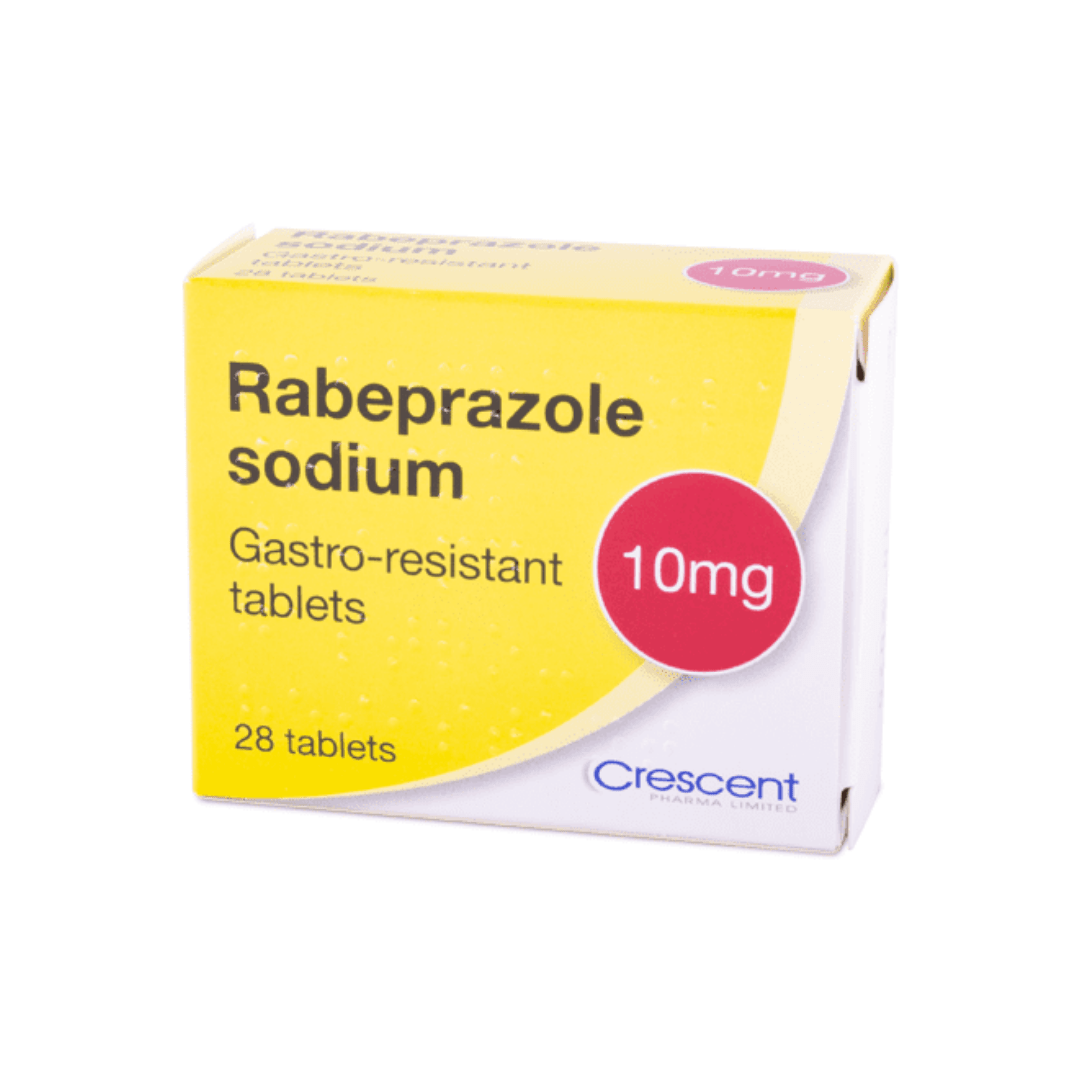
Rabeprazole 10mg GR – 28 Tablets
£9.99
Rabeprazole is an effective treatment for gastro-oesophageal reflux disease (GORD), including both the treatment and maintenance of proven GORD, as well as the symptomatic relief of reflux symptoms such as heartburn and acid regurgitation in adults, following a clinical assessment.
Rabeprazole works by reducing the amount of acid produced in the stomach, helping to relieve discomfort and allowing the oesophagus to heal. It belongs to a group of medicines known as proton pump inhibitors (PPIs).
Please Note: You are also required to complete a form at checkout. In addition, a video consultation with our pharmacist may be required.
Payment does not guarantee approval or supply
All prescription medication (Online Clinic) requests are subject to an independent clinical assessment. The final decision, including the medication and dose prescribed, rests with the prescriber. If your request is declined and no medication is supplied, your payment will be refunded in full in accordance with our refund policy.
Categories: Age verification, General, Heartburn & Acid Reflux, Online Clinic
Tags: ID Required, Private Rx
You may be interested in these
What is Rabeprazole Tablets used for?
Rabeprazole tablets are used for the treatment and maintenance of proven gastro-oesophageal reflux disease (GORD), as well as the symptomatic treatment of GORD in the absence of oesophagitis (inflammation of the oesophagus) in adults.
GORD occurs when stomach acid flows back up into the oesophagus (gullet), leading to symptoms such as heartburn, acid regurgitation, and discomfort. Oesophagitis (oesophagitis) is when the lining of the oesophagus becomes inflamed or irritated due to repeated exposure to stomach acid. Rabeprazole helps to relieve these symptoms and prevent them from returning when used as maintenance therapy.
How Rabeprazole Tablets work
Rabeprazole contains the active ingredient rabeprazole and belongs to a group of medicines called proton pump inhibitors (PPIs), which are commonly used to reduce stomach acid production and treat acid-related conditions.
It works by blocking the action of tiny pumps in the stomach lining known as proton pumps, which are responsible for releasing acid. By inhibiting these pumps, rabeprazole reduces the amount of acid produced in the stomach.
This reduction in acid helps to relieve symptoms such as heartburn and acid regurgitation, allows the oesophagus to heal, and helps prevent further irritation.
Rabeprazole is suitable for both treating active GORD and maintaining symptom control over time. It may take a few days to provide full relief and should be taken as directed.
Always use this medicine exactly as your doctor or pharmacist has told you. Check with your doctor or pharmacist if you are not sure how to use this medicine.
The recommended dose for adults:
One to be taken in the morning, at least 30 minutes before food. Relief of symptoms is obtained rapidly.
Depending on symptom control, your prescriber will advise further regarding treatment and dosage frequency. Maintenance dose is recommended once symptoms are resolved.
If you take more Rabeprazole sodium than you should
Do not take more tablets each day than you are prescribed. If you accidentally take more tablets than the prescribed dose, please consult your doctor or go to the hospital straight away. Always take the tablets and the carton with you to the hospital so that the doctor knows what has been taken.
If you forget to take Rabeprazole sodium
If you forget to take a dose, just take it immediately when you remember, and then continue as usual. If you forget to take your medicine for more than 5 days, call your doctor before taking any more medicine. Do not take a double dose to make up for a forgotten dose.
If you stop taking Rabeprazole sodium
Do not change the dosage or stop the medication without discussing it with your doctor first.
Like all medicines, this medicine can cause side effects, although not everybody gets them. Some of the side effects are temporary with continued treatment or disappeared when treatment is stopped.
Side Effects
Common
- Infection
- Insomnia (difficult sleeping)
- Headaches, dizziness
- Cough, pharyngitis (sore throat)
- Rhinitis
- Diarrhoea, vomiting, nausea, abdominal pain, constipation (costiveness)
- Flatulence (wind)
- Benign polyps in the stomach
- Pain without any known cause, back pain
- Asthenia (weakness), flu like syndrome
Uncommon
- Nervousness or drowsiness
- Bronchitis, sinusitis
- Dyspepsia (indigestion), dry mouth, eructation (belching)
- Skin rash, redness of the skin
- Muscle or joint pain, leg cramps, fracture of the hip, wrist or spine
- Urinary tract infection
- Chest pain
- Chills, fever
- Changes in liver function test values
Rare (may affect up to 1 in 1,000 people):
- Anorexia (loss of appetite)
- Depression
- Hypersensitivity (including allergic reactions) – Vision disturbances
- Gastritis (upset stomach or stomach pain), stomatitis (sore mouth), taste disturbances
- Liver problems such as hepatitis (inflammation of the liver) and jaundice (yellowing of your skin and whites of your eyes), hepatic encephalopathy (brain damage due to liver disease)
- Itching, sweating, skin blisters (these reactions have usually resolved after discontinuation of therapy)
- Sweating
- Kidney problems such as interstitial nephritis (disorders of the connective tissue within the kidney)
- Weight gain
- Changes in white blood cells (shown in blood tests) which may result in frequent infection
- Thrombocytopenia (decrease of blood platelets) – reduction in blood platelets resulting in bleeding or bruising more easily than normal
Frequency Not Known
- Confusion
- Swelling of the feet or ankles
- Breast swelling in men
- Hyponatremia (low levels of sodium in the blood) – the symptoms are feeling sick and unwell with weak muscles or confused
- Rash, possibly with pain in the joints
If you are on rabeprazole for more than three months it is possible that the levels of magnesium in your blood may fall. Low levels of magnesium can be seen as fatigue, involuntary muscle contractions, disorientation, convulsions, dizziness, increased heart rate. If you get any of these symptoms, please tell your doctor promptly.
Low levels of magnesium can also lead to a reduction in potassium or calcium levels in the blood. Your doctor may decide to perform regular blood tests to monitor your levels of magnesium.
Serious Side Effects
Stop taking Rabeprazole sodium and see a doctor straight away if you notice any of the following side effects – you may need urgent medical treatment:
- Allergic reactions – the signs may include: sudden swelling of your face, difficulty breathing or low blood pressure which may cause fainting or collapse
- Frequent infections, such as a sore throat or high temperature (fever), or ulcers in your mouth or throat
- Bruising or bleeding easily
- Severe skin blistering, or soreness or ulcers in your mouth and throat
If you get any side effects, talk to your doctor or pharmacist. This includes any possible side effects not listed in this leaflet. You can also report side effects directly via the Yellow Card Scheme at www.mhra.gov.uk/yellowcard or search for MHRA Yellow Card in the Google Play or Apple App Store. By reporting side effects you can help provide more information on the safety of this medicine.
Warning & Precautions
Do not take Rabeprazole sodium:
- if you are allergic to rabeprazole sodium or any of the other ingredients of this medicine
- if you are pregnant, you think you might be pregnant or if you are breast feeding (please see Pregnancy and breast-feeding)
Talk to your doctor or pharmacist before taking Rabeprazole sodium.
Tell your doctor or pharmacist:
- if you are allergic to other proton pump inhibitors
- if you have been told you have a stomach tumour
- if you have a history of liver disease
- if you are taking atazanavir (a drug used to treat HIV)
- if you have reduced body stores or risk factors for reduced vitamin B12 and receive long term treatment with rabeprazole sodium. As with all acid reducing agents, rabeprazole sodium may lead to a reduced absorption of vitamin B12
- if you have ever had a skin reaction after treatment with a medicine similar to Rabeprazole sodium that reduces stomach acid
- if you are due to have a specific blood test (Chromogranin A).
If you get a rash on your skin, especially in areas exposed to the sun tell your doctor as soon as you can, as you may need to stop your treatment with Rabeprazole sodium. Remember to also mention any other ill-effects like pain in your joints.
If you are taking this medicine for a long time, your doctor will want to monitor you.
Blood and liver problems have been seen in some patients but often get better when rabeprazole treatment is stopped.
If you experience severe (watery or bloody) diarrhoea with symptoms such as fever, abdominal pain or tenderness, stop taking Rabeprazole sodium and see a doctor straight away.
Taking a proton pump inhibitor like Rabeprazole sodium, especially over a period of more than one year, may slightly increase your risk of fracture in the hip, wrist or spine. Tell your doctor if you have osteoporosis or if you are taking corticosteroids (which can increase the risk of osteoporosis).
Age Restrictions
Adults age 18 years and over.
Other Medicines and Conditions
Tell your doctor or pharmacist if you are taking, have recently taken or might take any other medicines.
Tell your doctor or pharmacist:
- if you are taking ketoconazole or itraconazole (drugs used to treat fungal infections). Rabeprazole sodium may lower the amount of this type of medicine in your blood. Your doctor may need to adjust your dose.
- if you are taking atazanavir (a drug used to treat HIV). Rabeprazole sodium may lower the amount of this type of medicine in your blood and they should not be used together.
- if you are taking methotrexate (a chemotherapy medicine used in high doses to treat cancer) – if you are taking a high dose of methotrexate, your doctor may temporarily stop your Rabeprazole sodium treatment.
If you are not sure if any of the above apply to you, talk to your doctor or pharmacist before using Rabeprazole sodium.
Driving and using machines
Side effects such as dizziness, vertigo, tiredness and visual disturbances sometimes occur in patients taking Rabeprazole. If you experience side effects like these you should take caution as your ability to react may be decreased.
Pregnancy and Breastfeeding
This medicine is not suitable for use in pregnancy and breastfeeding.
Patient Information Leaflet
https://www.medicines.org.uk/emc/files/pil.14539.pdf
Ingredients
- Active Ingredients: Rabeprazole
- Other Ingredients: Tablet Core: mannitol (E421), light magnesium oxide (E530), hydroxypropylcellulose (E463), low-substituted hydroxypropylcellulose (E463) and magnesium stearate (E572). Tablet Coating: ethylcellulose (E462), light magnesium oxide (E530), hypromellose phthalate, diacetylated monoglycerides (E472a), talc (E553b), titanium dioxide (E171), red iron oxide (E172) (10 mg only) and yellow iron oxide (E172).
Product Information
- Brand Name: Rabeprazole (Generic)
- Route of Administration: Oral
- Legal Classification: Prescription Only Medication (POM)
- Strength: 10mg
- Dosage From: Tablet
Storage
- Keep this medicine out of the sight and reach of children.
- Do not use this medicine after the expiry date which is stated on the carton and blister after ‘EXP’. The expiry date refers to the last day of that month.
- This medicinal product does not require any special storage conditions.
- Do not throw away any medicines via wastewater or household waste. Ask your pharmacist how to throw away medicines you no longer use. These measures will help protect the environment.
Advice & Helpful Links