
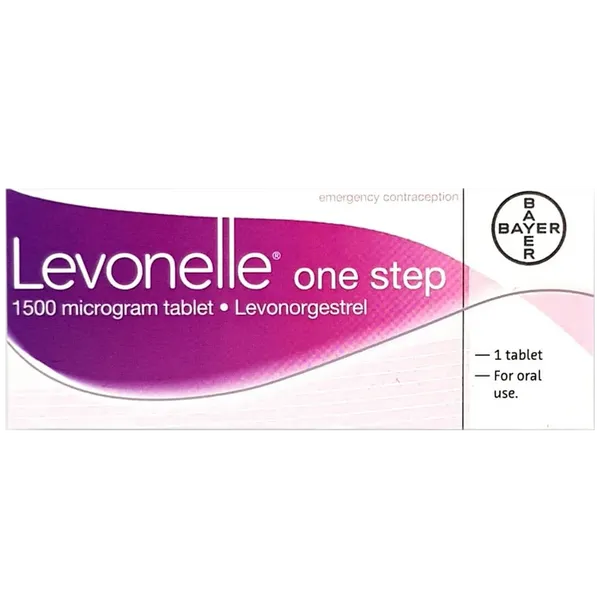
Levonelle One Step (Levonorgestrel) “The Morning After Pill” Pack of 1
£12.99
Levonelle is an emergency contraceptive used to help prevent pregnancy after unprotected sex or if a regular contraceptive method has failed, following a clinical assessment.
Levonelle 1500 works by delaying or stopping the release of an egg from the ovaries and may also prevent sperm from fertilising an egg. It should be taken as soon as possible and within 72 hours (3 days) of unprotected sex for the best chance of preventing pregnancy. It will not work if you are already pregnant and does not replace regular contraception.
Categories: Age verification, Emergency Hormonal Contraception, Medicines, Online Shop, Womens Health
Tags: PGD
You may be interested in these
What is Levonelle One Step used for?
Levonelle One Step is an emergency contraceptive used to help prevent pregnancy after unprotected sex or when your regular contraceptive method has failed.
Emergency contraception can be used within 72 hours (3 days) of unprotected sexual intercourse.
Situations where Levonelle may be used include:
- No contraception was used during sexual intercourse.
- A condom broke, slipped, or was used incorrectly.
- A diaphragm or vaginal pessary moved out of place, broke, or was removed too early.
- A failed withdrawal method (for example, semen ejaculated in the vagina or on the external genital area).
Levonelle contains the active ingredient levonorgestrel, a synthetic hormone used for emergency contraception. When taken within 72 hours, it can prevent around 84% of expected pregnancies.
It works best when taken as soon as possible, ideally within 12 hours of unprotected sex rather than waiting until the third day.
How Levonelle works
Levonelle works by using the hormone levonorgestrel to prevent pregnancy in the early stages of the reproductive process.
It is thought to work by:
- Stopping the ovaries from releasing an egg (ovulation).
- Preventing sperm from fertilising an egg that may already have been released.
Levonelle only works if taken within 72 hours of unprotected sex. It will not work if you are already pregnant and will not terminate an existing pregnancy.
If another episode of unprotected sex occurs after taking Levonelle, even during the same menstrual cycle, the tablet will not provide protection, and there is again a risk of pregnancy.
Levonelle is intended for emergency use only and should not be used as a regular contraceptive method. It is also not indicated for use before the first menstrual period.
| Weight | 0.012 kg |
|---|---|
| Quantity | 1 |
Always use this medicine exactly as your doctor or pharmacist has told you. Check with your doctor or pharmacist if you are not sure how to use this medicine.
The recommended dose:
Take the tablet as soon as possible, preferably within 12 hours, and no later than 72 hours (3 days) after you have had unprotected sex. Do not delay taking the tablet. The tablet works best the sooner you take it after having unprotected sex. It can only prevent you becoming pregnant, if you take it within 72 hours of unprotected sex.
- Levonelle can be taken at any time in your menstrual cycle assuming you are not already pregnant or think you may be pregnant. Do not chew but swallow the tablet whole with water.
- If you are using one of the medicines that may prevent Levonelle from working properly or if you have used one of these medicines in the past 4 weeks, Levonelle may work less effectively for you. Your doctor may prescribe another type of (non-hormonal) emergency contraceptive, i.e. a copper intrauterine device (Cu-IUD). If this is not an option for you or if you are unable to see your doctor promptly, you can take a double dose of Levonelle (i.e. 2 tablets taken together at the same time).
- If you are already using a regular method of contraception such as the contraceptive pill, you can continue to take this at your regular times.
If another unprotected intercourse takes place after the use of Levonelle (also if this is during the same menstrual cycle), the tablet will not exert its contraceptive effect and there is again the risk of pregnancy.
You are advised to speak to a healthcare professional if you are concerned about any problems related to taking emergency contraception.
What to do if you vomit
If you vomit within three hours of taking the tablet, you should immediately take another tablet.
After you have taken Levonelle
After you have taken Levonelle, if you want to have sex, and are not using the contraceptive pill, you should use condoms or a cap plus spermicide until your next menstrual period. This is because Levonelle will not work if you have unprotected sex again, before your next period is due.
After you have taken Levonelle, you are advised to make an appointment to see your doctor about three weeks later, to make sure that Levonelle has worked. If your period is more than 5 days late or is unusually light or unusually heavy, you should contact your doctor as soon as possible.
If you do become pregnant even after taking this medicine, it is important that you see your doctor.
Your doctor can also tell you about longer-term methods of contraception which are more effective in preventing you from getting pregnant.
If you continue to use regular hormonal contraception such as the contraceptive pill and you do not have a bleed in your pill-free period, see your doctor to make sure you are not pregnant.
Your next period after you took Levonelle
After the use of Levonelle, your period is usually normal and will start at the usual day; however sometimes, this will be a few days later or earlier. If your period starts more than 5 days later than expected, an ‘abnormal’ bleeding occurs at that time or if you think that you might be pregnant, you should check whether you are pregnant by a pregnancy test.
If you take more Levonelle than you should
Although there have been no reports of serious harmful effects from taking too many tablets at once, you may feel sick, actually be sick (vomit), or have vaginal bleeding. You should ask your pharmacist, doctor, practice nurse or family planning clinic for advice, especially if you have been sick, as the tablet may not have worked properly.
If you have any further questions on the use of this medicine, ask your doctor or pharmacist.
Like all medicines, this medicine can cause side effects, although not everybody gets them. Some of the side effects are temporary with continued treatment or disappeared when treatment is stopped.
Side Effects
Very common
- Feeling sick (nausea)
- You might have some irregular bleeding until your next period
- You might have lower abdominal pain
- Tiredness
- Headache
Common
- Vomiting
- Your period might be different. Most women will have a normal period at the expected time, but some may have their period later or earlier than normal. You might also have some irregular bleeding or spotting until your next period. If your period is more than 5 days late or is unusually light or unusually heavy, you should contact your doctor as soon as possible.
- You might have tender breasts, diarrhoea, feel dizzy after taking this medicine.
Very Rare
- Rash, urticaria, pruritus, swelling of the face pelvic pain, painful period
If you get any side effects, talk to your doctor or pharmacist. This includes any possible side effects not listed in this leaflet. You can also report side effects directly via the Yellow Card Scheme at www.mhra.gov.uk/yellowcard or search for MHRA Yellow Card in the Google Play or Apple App Store. By reporting side effects you can help provide more information on the safety of this medicine.
Warning & Precautions
Do not use Levonelle
- if you are allergic to levonorgestrel or any of the other ingredients of this medicine.
If any of the following applies to you, talk to your doctor before taking Levonelle as emergency contraception may not be suitable for you. Your doctor may prescribe another type of emergency contraception for you.
If you are pregnant or think that you may already be pregnant. This medicine will not work if you are already pregnant. If you are already pregnant, Levonelle cannot terminate pregnancy, so Levonelle is not an “abortion pill”.
You may already be pregnant if:
- your period is more than 5 days late, or you have experienced unusual bleeding when your next period is due
- you have had unprotected sex more than 72 hours ago, and since your last period.
The use of Levonelle is not advised if:
- you have a disease of your small bowel (such as Crohn’s disease) that inhibits the absorption of the drug.
- you have severe liver problems.
- you have a history of ectopic pregnancy (where the baby develops somewhere outside the womb).
- you have a history of salpingitis (inflammation of the Fallopian tubes). A previous ectopic pregnancy or previous infection of the fallopian tubes increase the risk of a new ectopic pregnancy.
In all women, emergency contraception should be taken as soon as possible after unprotected intercourse. There is some evidence that Levonelle may be less effective with increasing body weight or body mass index (BMI), but these data were limited and inconclusive. Therefore, Levonelle is still recommended for all women regardless of their weight or BMI.
You are advised to speak to a healthcare professional if you are concerned about any problems related to taking emergency contraception.
Levonelle is not indicated for use before the first menstrual bleeding (menarche).
If you are worried about sexually transmitted diseases
If you did not use a condom (or if it has been torn or slid down) during the intercourse, it might be possible that you have caught a sexually transmitted disease or the HIV virus. This medicine will not protect you against sexually transmitted diseases, only condoms can do this.
Ask your doctor, nurse, family planning clinic or pharmacist for advice if you are worried about this.
Age Restrictions
Women over the age of 18 years.
Other Medicine and Conditions
Tell your doctor or pharmacist if you are taking or have recently taken or might take any other medicines.
Some medicines may prevent Levonelle from working effectively. If you have used any of the medicines below during the last 4 weeks, Levonelle may be less suitable for you. Your doctor may prescribe another type of (non-hormonal) emergency contraceptive, i.e. a copper intrauterine device (Cu-IUD). If this is not an option for you or if you are unable to see your doctor promptly, you can take a double dose of Levonelle:
- barbiturates and other medicines used to treat epilepsy (for example primidone, phenytoin, and carbamazepine)
- medicines used to treat tuberculosis (for example, rifampicin, rifabutin)
- treatment for HIV (ritonavir, efavirenz)
- a medicine used to treat fungal infections (griseofulvin)
- herbal remedies containing St John’s wort (Hypericum perforatum).
Talk to your pharmacist or doctor if you need further advice on the correct dose for you.
Consult a doctor as soon as possible after taking the tablets for further advice on a reliable form of regular contraception and to exclude a pregnancy.
Levonelle may also affect how well other medicines work:
- a medicine called cyclosporin (suppresses the immune system).
How often can you use Levonelle
You should only use Levonelle in emergencies and not as a regular method of contraception. If Levonelle is used more than once in a menstrual cycle, it is less reliable and it is more likely to upset your menstrual cycle (period).
Levonelle does not work as well as regular methods of contraception. Your doctor, practice nurse or family planning clinic can tell you about long-term methods of contraception which are more effective in preventing you from getting pregnant.
Fertility
Levonelle increases the possibility of menstruation disturbances which can sometimes lead to earlier or later ovulation date resulting in modified fertility date. Although there are no fertility data in the long term, after treatment with Levonelle a rapid return to fertility is expected and therefore, regular contraception should be continued or initiated as soon as possible after Levonelle use.
Driving and using machines
Your Levonelle tablet is unlikely to affect your ability to drive a car or use machines. However, if you feel tired or dizzy do not drive or operate machinery.
Pregnancy and Breastfeeding
Not recomended for use in pregnancy.
The active ingredient of this medicine is excreted into your breast milk. Therefore, it is suggested that you take your tablet immediately after a breast-feeding and avoid nursing at least 8 hours following levonorgestrel administration then drain your milk with a breast pump for 8 hours following tablet taking. In this way you are taking your tablet well before the next feed and reducing the amount of active ingredient your baby may take in with the breast milk.
Patient Information Leaflet
https://www.medicines.org.uk/emc/files/pil.5576.pdf
Ingredients
- Active Ingredients: Levonorgestrel 1500mcg
- Other Ingredients: Potato starch, Maize starch, Colloidal silica anhydrous, Magnesium stearate, Talc, Lactose monohydrate.
Product Information
- Brand Name: Levonelle
- Route of Administration: Oral
- Legal Classification: Prescription Only Medication (POM)
- Strength: 1500mcg
- Dosage From: Tablet
Storage
- Keep this medicine out of the sight and reach of children.
- Do not use Levonelle 1500 after the expiry date which is stated on the package after EXP. The expiry date refers to the last day of the month.
- Store in the original packaging in order to protect from light.
- Do not throw away any medicines via wastewater or household waste. Ask your pharmacist how to throw away medicines you no longer use. These measures will help to protect the environment.
Advice & Helpful Links